
Variable Geometry Turbochargers (VGT): The Game-Changer for Turbocharged Engines
If you’ve ever driven a turbocharged vehicle, you’re likely familiar with the frustrating “turbo lag”—that split-second delay between slamming the gas pedal and feeling the engine’s full power kick in. For decades, this has been the Achilles’ heel of traditional fixed-geometry turbochargers (FGTs), which struggle to balance low-end torque and high-speed performance. Enter Variable Geometry Turbochargers (VGTs)—a revolutionary technology that eliminates compromise, delivering instant response, broader power bands, and improved efficiency. In this blog, we’ll dive into how VGTs work, their key advantages, real-world applications, and why they’re becoming the gold standard for modern engines.
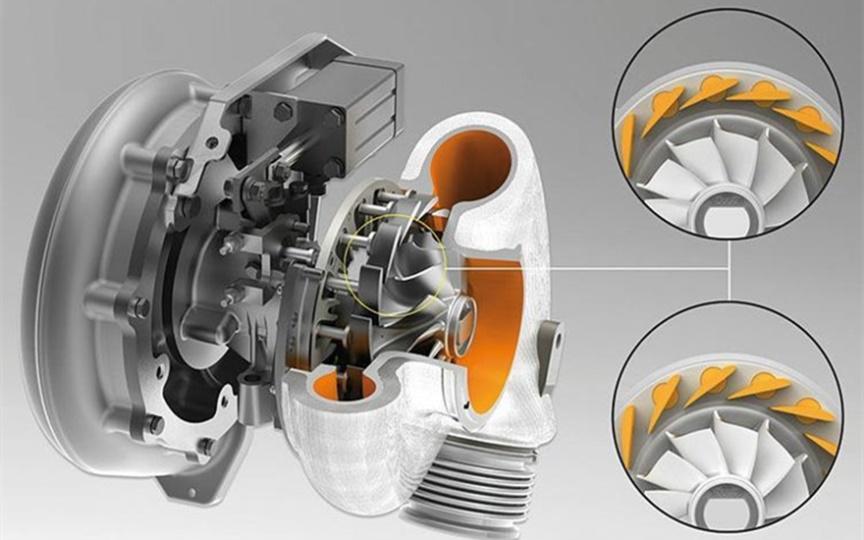
What Exactly Is a Variable Geometry Turbocharger?
At its core, a VGT (also known as VNT—Variable Nozzle Turbine, or VTG—Variable Turbine Geometry) is a turbocharger that dynamically adjusts the flow of exhaust gases through the turbine housing. Unlike fixed-geometry turbos, which have a single, unchangeable exhaust gas path, VGTs feature a set of movable vanes (or a nozzle ring) at the turbine inlet. These vanes are controlled by an electronic or pneumatic actuator, which adjusts their angle in real time based on engine speed, load, and driving conditions.
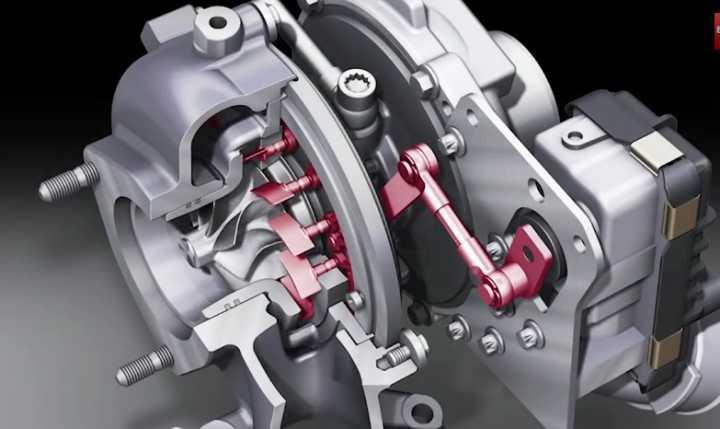
The Core Mechanism: How VGT Vanes Adapt to Every Operating Condition
The magic of VGTs lies in their ability to optimize exhaust gas velocity and pressure for any engine state. Here’s a breakdown of how the vanes adjust:
- Low Engine Speed/Low Load: When you’re idling, cruising at low speeds, or accelerating from a stop, the VGT vanes close (narrow the flow path). This reduces the exhaust gas cross-sectional area, forcing gases to accelerate through the turbine at higher speeds. The faster-moving exhaust spins the turbine wheel more quickly—even at low RPM—delivering instant boost pressure and eliminating turbo lag. The result? Responsive low-end torque that feels like a naturally aspirated engine.
- High Engine Speed/High Load: As you rev the engine or demand maximum power (e.g., passing on the highway), the vanes open (widen the flow path). This increases the exhaust gas cross-sectional area, reducing backpressure and preventing the turbine from overspeeding. By allowing more exhaust gas to flow through without restriction, the VGT maintains efficient boost at high RPM, ensuring consistent high-power output without sacrificing reliability.
- Transient Conditions (e.g., Rapid Acceleration): During quick throttle inputs, the actuator adjusts the vanes in milliseconds to balance immediate boost and long-term efficiency. This seamless transition ensures the engine responds instantly while avoiding overboost or turbine damage.
Common VGT Design Variants
Not all VGTs are created equal—manufacturers have developed different designs to suit specific applications:
- Variable Nozzle Turbine (VNT): The most common design, featuring a circular array of rotating vanes at the turbine inlet. VNTs offer wide adjustment ranges and excellent low-speed efficiency, making them ideal for passenger cars and light commercial vehicles.
- Variable Throat/Aero-Vane Design: A simpler, lower-cost variant with a single adjustable flap (instead of multiple vanes). While less precise, it’s popular in budget-friendly diesel engines.
- Dual-Axle Variable Nozzle (DA-VNT): A heavy-duty design with vanes supported by two axles, improving durability under extreme heat and pressure. Used primarily in commercial trucks, off-road machinery, and high-performance diesel engines.
Key Advantages of VGTs Over Fixed-Geometry Turbos
VGTs solve nearly every limitation of traditional turbos, offering a laundry list of benefits for both drivers and manufacturers:
- Eliminated Turbo Lag: The biggest win for drivers—VGTs deliver boost at just 1,500–2,000 RPM (compared to 2,500–3,000 RPM for FGTs), resulting in instant throttle response. Whether you’re merging onto the highway or navigating city traffic, the power is there when you need it.
- Broader Power Band: By optimizing boost across the entire RPM range, VGTs provide consistent torque from low to high speeds. This means you get strong acceleration off the line and sustained power at highway speeds—no more “peaky” performance.
- Improved Fuel Efficiency: VGTs reduce exhaust backpressure at high loads, allowing the engine to breathe more freely. When combined with advanced engine management systems (e.g., EGR—Exhaust Gas Recirculation), they can improve fuel economy by 5–10% compared to FGTs.
- Lower Emissions: By precisely controlling boost pressure and exhaust flow, VGTs work seamlessly with emissions control systems like DPFs (Diesel Particulate Filters) and SCR (Selective Catalytic Reduction). This helps engines meet strict global emissions standards (e.g., Euro 6, EPA Tier 4) without sacrificing performance.
- Simplified System Design: Unlike FGTs, which require a wastegate to prevent overboost, VGTs use vane angle adjustment to control turbine speed. This eliminates the need for additional components, reducing complexity and potential points of failure.
Real-World Applications: Where You’ll Find VGTs
VGTs were first popularized in diesel engines (thanks to their lower exhaust temperatures, which are gentler on vane materials), but they’re now expanding to gasoline engines as materials and cooling technologies advance. Here are the most common use cases:
- Diesel Vehicles: The majority of modern diesel passenger cars (e.g., Volkswagen TDI, BMW 330d), commercial trucks (e.g., Ford F-250, Mercedes-Benz Actros), and off-road equipment (e.g., John Deere tractors) use VGTs. Diesel engines benefit greatly from VGTs’ low-end torque and efficiency, making them ideal for hauling, towing, and long-haul driving.
- Gasoline Vehicles: High-performance gasoline cars are increasingly adopting VGTs (often labeled VTG by manufacturers like Porsche). For example, the Porsche 911 Turbo S uses a VTG system to deliver 640 horsepower with minimal lag, while models like the Audi S4 and BMW M340i use VGTs to balance performance and daily drivability. The challenge with gasoline engines—higher exhaust temperatures (up to 1,050°C vs. 850°C for diesels)—has been addressed with heat-resistant materials like Inconel alloy and advanced cooling systems.
- Hybrid and Electrified Powertrains: VGTs are even finding their way into hybrid vehicles. By pairing VGTs with 48V mild-hybrid systems, manufacturers can further optimize efficiency—for example, using electric power to assist the turbo at low speeds and the VGT to maintain boost at high speeds.
Technical Challenges and How Manufacturers Overcome Them
While VGTs offer significant benefits, they’re not without engineering hurdles:
- High-Temperature Durability: Exhaust gases can reach extreme temperatures, which can warp or corrode vane materials. Manufacturers solve this by using superalloys (e.g., Inconel, titanium aluminide) or ceramic coatings that withstand heat without deforming.
- Precision Control: The vane actuator must respond in milliseconds to changing driving conditions. Modern VGTs use electronic actuators (instead of older pneumatic systems) for faster, more accurate adjustments, paired with advanced ECU (Engine Control Unit) algorithms.
- Cost: VGTs are more complex to manufacture than FGTs, which initially made them more expensive. However, as production scales and technology matures, costs are decreasing, making VGTs accessible to mainstream vehicles.
The Future of VGT Technology
As automotive manufacturers push for cleaner, more efficient, and more powerful engines, VGTs are evolving to meet new demands:
- Electrification of Actuators: Next-gen VGTs will use fully electric actuators (instead of electro-pneumatic hybrids) for even faster response times (down to 10ms) and more precise boost control.
- Advanced Materials: Researchers are developing new materials like ceramic-matrix composites (CMCs) that are lighter, stronger, and more heat-resistant than current alloys. This will allow VGTs to handle even higher exhaust temperatures, opening up applications in high-performance gasoline and hydrogen-fueled engines.
- System Integration: VGTs will be increasingly integrated with other powertrain components, such as 48V mild hybrids, electric turbochargers (e-turbos), and exhaust aftertreatment systems. For example, a hybrid VGT-e-turbo system could eliminate lag entirely—using the e-turbo for low speeds and the VGT for high speeds.
- Software-Defined Optimization: With the rise of connected cars, VGTs could soon receive over-the-air (OTA) updates to optimize vane control based on real-world driving data. This would allow manufacturers to fine-tune performance, efficiency, and emissions throughout the vehicle’s lifecycle.
Variable Geometry Turbochargers have redefined what’s possible with turbocharged engines, turning a major flaw (turbo lag) into a competitive advantage. Whether you’re a daily commuter seeking better fuel economy, a truck driver needing maximum towing power, or a performance enthusiast craving instant acceleration, VGTs deliver. As materials, electronics, and powertrain integration continue to advance, VGTs will remain a critical technology in the shift toward cleaner, more efficient, and more enjoyable vehicles.
If you’re shopping for a new turbocharged car or truck, keep an eye out for VGT/VNT/VTG badging—it’s a sign that you’re getting a vehicle that doesn’t compromise on performance or efficiency. And for engineers and enthusiasts alike, the future of VGT technology promises even more exciting innovations—proving that the turbocharger’s best days are still ahead.
